
Why play is medicine.
Play isn't a nice extra at the bedside. It's a clinically-backed way to ease the pain, fear and isolation kids face in the hospital — and we built the system that delivers it. Here's the evidence, and the machine behind it.
The world's only networked Xbox hospital system.
Most hospital "gaming" is a console on a cart that gets wiped, re-imaged and re-checked-out by hand every time a child uses it — slow, unsafe to network, and easy to lose. GameChanger solved the problem no one else has: a single, secured gaming network that spans an entire hospital, so any kid in any bed can safely pick up a controller and play — together, online, in a clinical environment that meets infection-control and IT-security standards.
It's verified, not claimed: the CEO of a hospital serving 350+ kids a day calls it the most advanced safe gaming network in any hospital in the world.
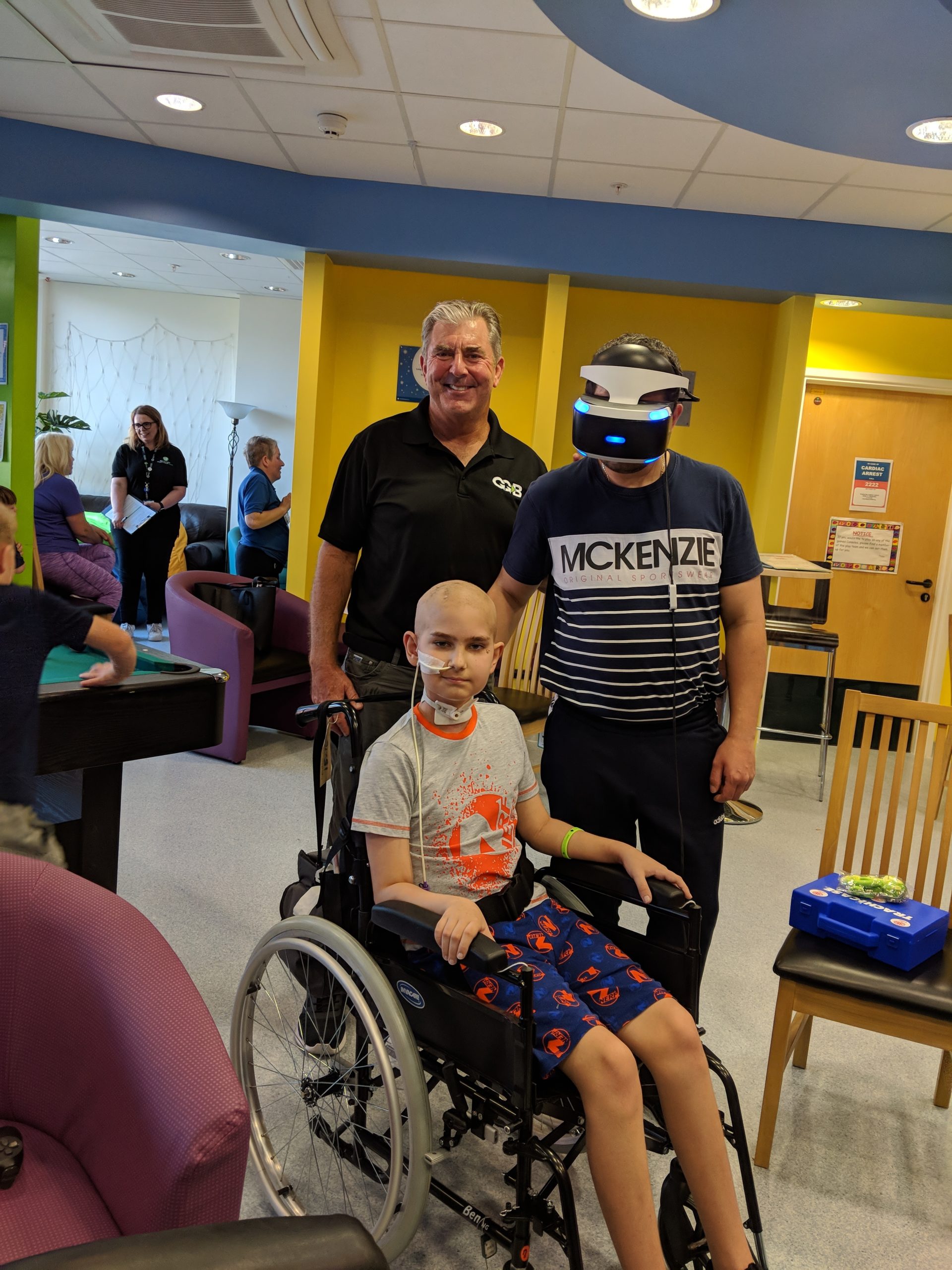
A safe, hospital-wide game system
We design and install a secured gaming network that satisfies hospital IT and infection-control requirements — the hard part everyone else stops at. Once it's live, it reaches every connected room.
Consoles, VR, games & comfort
In-room consoles, VR headsets, game rooms, family lounges and teen spaces — plus the donated games and digital codes that keep the library fresh. The $18.4M in donated product is the lifeblood that fills it.
Joy, on demand, where they are
A kid stuck in isolation can drop into a match, race a friend down the hall, or build a world in VR — without leaving the bed. We don't hand out brochures. We deliver play to a bedside.
Play is the medicine.
This isn't sentiment. Distraction through play and games is among the best-supported, lowest-risk interventions in pediatric procedural care — established by the gold standard of medical evidence and endorsed by the pediatricians who set the standards.
children across 59 randomized trials. This Cochrane systematic review — the gold standard of medical evidence — found that distraction, including games and play, is the best-supported way to reduce the pain and distress children feel during needle procedures like blood draws, IVs and vaccinations.
Birnie KA, et al. Psychological interventions for needle-related procedural pain and distress in children and adolescents. Cochrane Database of Systematic Reviews (2018).studies of game-based and virtual-reality distraction, reviewed together. The analysis found large reductions in children's pain and anxiety during medical procedures when interactive play was used — the kind of immersive, attention-capturing experience a VR headset or a game delivers far better than passive distraction.
Eijlers R, et al. Systematic review and meta-analysis of virtual reality in pediatrics: effects on pain and anxiety. Anesthesia & Analgesia (2019).The AAP — the professional body of U.S. pediatricians — calls play essential to healthy development and resilience, and urges clinicians to go so far as to "prescribe" play. Inside the hospital, that's exactly what a GameChanger system makes possible at scale.
American Academy of Pediatrics. The Power of Play: A Pediatric Role in Enhancing Development in Young Children. Pediatrics (2018).Why it works: serious play captures attention so fully that the brain has less capacity left to process pain and fear. It also restores a child's sense of agency and normalcy — the feeling of being a kid, not just a patient — which medicine alone can't provide.
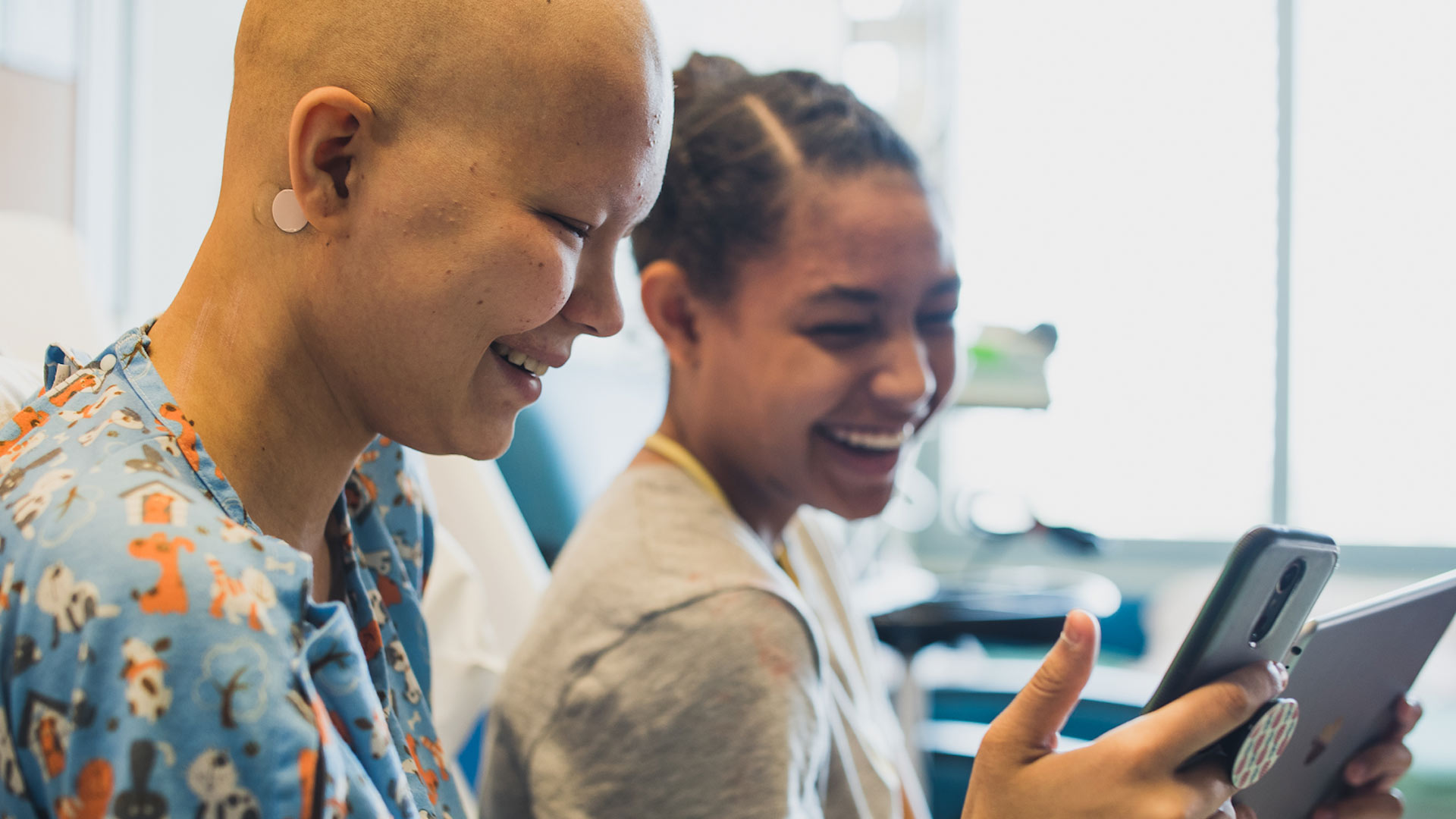
The people at the bedside say it best.
The strongest evidence is the word of the hospital leaders and physicians who watch it work, shift after shift.
"Thanks to GameChanger, we created what we believe is the world's most advanced safe gaming network in any hospital — serving over 350 kids a day."
"The joy on our patients' faces when they receive a GameChanger gaming kit is unforgettable. It transforms their hospital stay, giving them a sense of normalcy and connection that medicine alone can't provide."
The programs behind the medicine.
Play takes many forms inside a hospital. Every one of these runs on the network we build — and reaches kids in 250+ hospitals on five continents.
Hospital game rooms
Dedicated spaces where kids leave the bed behind and play together — the social heart of a children's ward.
In-room consoles
For kids in isolation or too sick to leave the room, a console at the bedside brings the game to them.
Virtual reality
Immersive VR for procedural distraction and escape — the modality with the strongest pain-and-anxiety evidence.
Family lounges
Calm, comfortable spaces so families caring for a sick child get a moment of normal life too.
Teen spaces
Older kids are too often forgotten in pediatric care. We build spaces and gaming made for them.
3D printing
Hands-on creation and custom adaptive gaming aids — turning a hospital stay into a chance to make something.
Comfort gifts & Hope plush
Toys, LEGO and Hope the Monkey — a soft landing and a friend to hold for a frightened kid far from home.
Equine therapy
Time with horses for healing and connection beyond the screen — play and comfort in another form.
Survivor scholarships
Scholarships for survivors — supporting the kids who made it through, the way our co-founder Taylor did.
Yale XR research
Partnership with the Yale XR Lab studying how extended-reality play reduces stress for hospitalized kids.
Stream fundraisers
MineChanger & Gaming for Good Month rally the gaming community to fund the mission through Twitch & Tiltify.
Global reach
From Salt Lake City to Johannesburg — the same safe gaming network, delivered across five continents.
Turn the evidence into a kid's game night.
You've seen why it works. $150 puts a console in a room and turns a sterile space into a place to play.